What Is OMNIA Partners? Exmark Cooperative Purchasing in Virginia

David KM • October 8, 2026

For government agencies, schools, colleges, municipalities, and nonprofit organizations, purchasing commercial equipment can involve much more than simply choosing the right machine. Procurement requirements, competitive bidding, and contract documentation can add significant time to the process.

OMNIA Partners offers another option.

Through cooperative purchasing, eligible public-sector and nonprofit organizations can access competitively solicited and publicly awarded contracts that have already gone through a formal procurement process.

For organizations looking for professional mowing and turf-care equipment, Exmark equipment is available through an OMNIA Partners cooperative contract, and K&M Equipment Group can help eligible Virginia organizations navigate equipment selection and purchasing.

What Is OMNIA Partners?

OMNIA Partners is a cooperative purchasing organization that provides participating organizations access to contracts for a wide variety of products and services.

Instead of every agency conducting a separate solicitation for the same type of equipment, a lead public agency conducts a competitive procurement process and awards a master agreement. Eligible organizations can then use that cooperative contract for their own purchases, subject to their individual procurement requirements.

This can help reduce duplicated purchasing work while giving agencies access to established contract pricing, terms, and documentation.

Who Can Use OMNIA Partners?

OMNIA Partners cooperative contracts are used by many types of organizations, including:

  • State and local government agencies
  • Counties, cities and towns
  • Parks and recreation departments
  • Public works departments
  • K–12 school systems
  • Colleges and universities
  • Eligible nonprofit organizations
  • Other qualifying public entities

Each organization is responsible for confirming that use of a cooperative contract meets its own purchasing policies and applicable requirements.

Exmark Equipment Through OMNIA Partners

Exmark is an awarded supplier available through OMNIA Partners for tractors, mowers, other equipment, parts, and services.

That makes the program especially useful for organizations responsible for maintaining:

  • Parks and athletic fields
  • School campuses
  • Municipal properties
  • Government facilities
  • Public green spaces
  • Roadsides and common areas
  • Large institutional grounds

Depending on the organization's needs and the applicable contract, Exmark's commercial equipment lineup can support demanding professional mowing applications.

Why Consider Cooperative Purchasing?

For many public organizations, the biggest advantage is efficiency.

A traditional equipment purchase may require staff to develop specifications, advertise a solicitation, collect bids or proposals, evaluate responses, and maintain the required procurement documentation.

A cooperative contract has already gone through a competitive solicitation and public award process.

For an eligible organization, that may mean:

Less duplicated procurement work.
Your staff may not need to conduct an entirely new competitive solicitation for equipment already covered by an appropriate cooperative contract.

Access to established contract terms.
The applicable master agreement provides the foundation for the purchase.

Better documentation.
Contract and solicitation documents are available to help procurement personnel evaluate whether the purchasing method meets their organization's requirements.

More time to focus on the equipment itself.
Instead of starting the procurement process from scratch, departments can spend more time identifying the machine that best fits their application.

OMNIA Partners vs. Sourcewell: What's the Difference?

Both OMNIA Partners and Sourcewell offer cooperative purchasing options, but the available manufacturers and contracts aren't necessarily the same.

At K&M Equipment Group, we work with multiple cooperative purchasing programs so government and institutional customers can identify the contract that applies to the equipment they need.

For example:

This gives eligible customers additional ways to purchase commercial mowing, outdoor power and compact equipment while working with a local equipment dealer.

Why Work With K&M Equipment Group?

A cooperative contract can simplify procurement, but choosing the right equipment still matters.

K&M Equipment Group works with government agencies, schools, municipalities, parks departments, nonprofit organizations, and other institutional customers throughout Virginia.

We can help you:

  • Identify the right Exmark equipment for your application
  • Compare commercial mower configurations
  • Prepare equipment quotes
  • Identify the appropriate cooperative purchasing program
  • Provide applicable purchasing information and documentation
  • Coordinate equipment setup and delivery
  • Support your equipment after the sale with parts and service

Our goal is to make the equipment side of government purchasing as straightforward as possible.

Serving Government and Institutional Customers in Virginia

K&M Equipment Group serves government and commercial customers throughout Central and Northern Virginia, including organizations in and around Culpeper, Madison, Orange, Rappahannock, Fauquier, Stafford, Prince William, Manassas, Loudoun, Fairfax, and Arlington.

Whether you maintain a small municipal property, a school campus, or hundreds of acres of public grounds, we can help you choose the equipment and purchasing option that best fits your operation.

Need an Exmark Government Quote?

If your agency, school, municipality or eligible nonprofit is considering Exmark equipment, contact K&M Equipment Group.

We can help you identify the appropriate machine, prepare a quote, and determine whether purchasing through OMNIA Partners is an option for your organization.

Request a Government Quote

Visit our Government & Cooperative Purchasing page to learn more about OMNIA Partners, Sourcewell, and the equipment programs available through K&M Equipment Group.

Purchasing requirements vary by organization and jurisdiction. Agencies should confirm that a cooperative contract meets their own procurement policies and applicable legal requirements.
GEHL SKID LOADER
By David KM • October 5, 2026
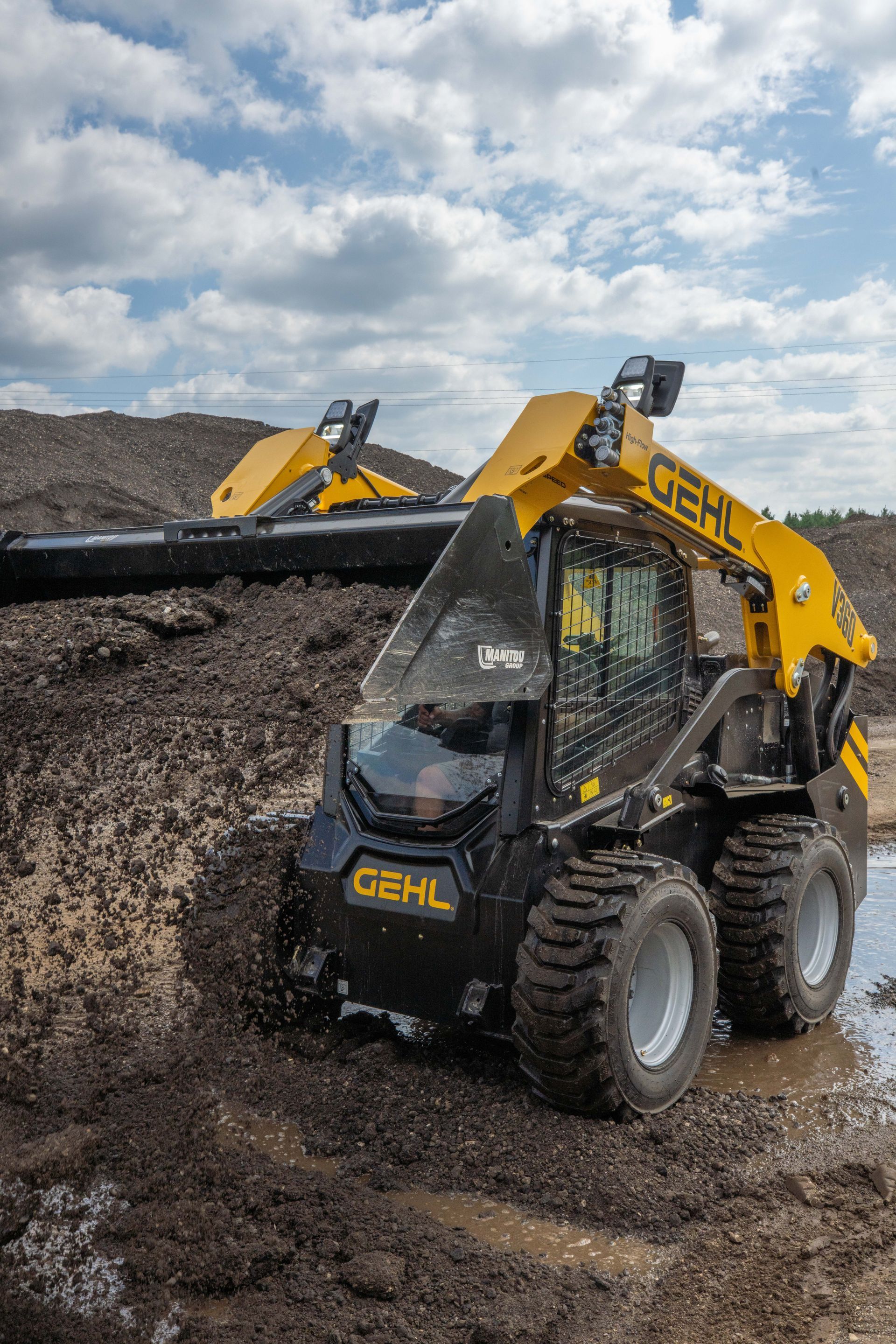
Keep your skid steer running longer with practical maintenance tips from K&M Equipment, including daily inspections, fluids, greasing, tracks, hydraulics, and service.
Professional arborist climbing gear and tree care supplies at K&M in Culpeper, Virginia
By David KM • October 2, 2026
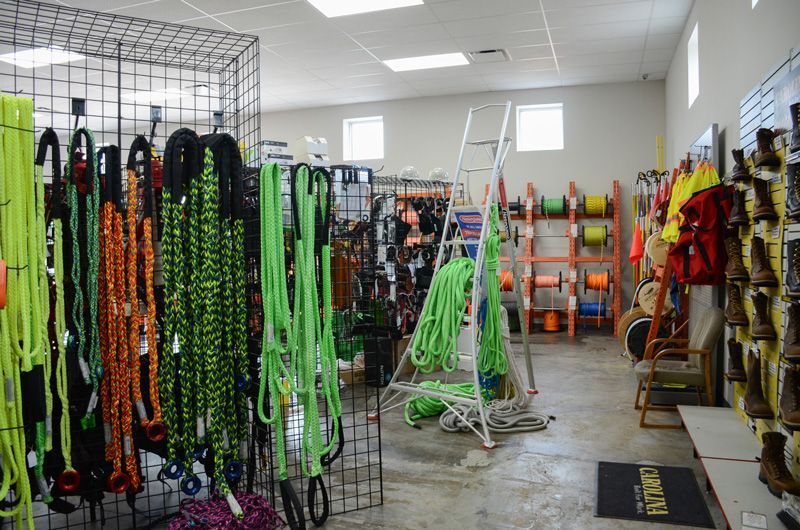
Learn about essential arborist supplies, including climbing gear, rigging equipment, arborist rope, PPE and professional tree care tools. Shop K&M in Culpeper, VA.
Yanmar Tractor
By David KM • September 28, 2026
Learn why Yanmar designs and builds its own tractor engines and major drivetrain components, and how integrated engineering can improve performance and reliability.
Yanmar Quick Hitch
By David KM • September 28, 2026
Learn how a 3-point tractor quick hitch works, its benefits, Cat 1 compatibility, compatible implements, and what to check before buying one.
GEHL Track loader
By David KM • September 25, 2026
Compare GEHL vs Bobcat compact track loaders, including RT and VT models, lift design, hydraulics, IdealTrax, serviceability, attachments, and operator features.
By David KM • September 13, 2026
Come join us on 10/20/2026
August 26, 2026
John Deere vs. Yanmar Compact Tractors: Which Is Right for You? If you’re shopping for a compact tractor, there’s a good chance both John Deere and Yanmar are on your list. Both brands have long histories in agricultural and compact equipment, loyal owners, and tractor models designed for everything from property maintenance to small farming. The better question isn’t necessarily, “Which brand is better?” It’s which tractor is the better fit for your property, your jobs, and your budget. Here are some of the key differences to consider when comparing John Deere and Yanmar compact tractors. Both Brands Have Deep Agricultural Roots John Deere is one of the most recognizable names in agriculture and has been building agricultural equipment for generations. Its compact tractor lineup is widely used by homeowners, farmers, landscapers, municipalities, and commercial operators. Yanmar also has a long history in agricultural equipment and diesel engine manufacturing. The company has been building diesel engines and tractors for decades and is especially well known for compact diesel power. One interesting connection between the two brands is that Yanmar has historically manufactured engines and equipment for other major tractor companies, including John Deere on certain compact tractor models over the years. That history helps explain Yanmar's strong reputation for compact diesel engines. Engine and Power Both manufacturers offer diesel-powered compact tractors designed for long service life and fuel-efficient operation. Yanmar is particularly known for designing and manufacturing its own compact diesel engines. In many Yanmar tractors, the engine, transmission, drivetrain, and tractor are engineered as an integrated system. John Deere also offers proven diesel engines across its compact tractor lineup and has a strong reputation for dependable power. When comparing tractors, don’t look at horsepower alone. Consider: PTO horsepower Loader lift capacity Hydraulic flow Tractor weight Transmission type Three-point hitch capacity Tire options Implement requirements A tractor with slightly less engine horsepower may actually be the better machine for your work depending on its weight, hydraulics, transmission, and attachment capabilities. Loader Capability For many compact tractor owners, the front-end loader becomes the most-used attachment on the tractor. Loaders are commonly used for: Moving mulch Handling firewood Cleaning barns Moving gravel Loading trailers Moving manure Landscaping Snow removal Carrying logs and brush Both John Deere and Yanmar offer loader-equipped compact tractors. When comparing them, look closely at lift height, lift capacity, breakout force, attachment compatibility, and how easy it is to remove and reinstall the loader. The right answer depends on what you actually expect the loader to do. Transmission Choices Hydrostatic transmissions are extremely popular in compact tractors because they make frequent forward-and-reverse work easier. That can be particularly useful for: Loader work Landscaping Mowing around obstacles Snow removal Barn work Both John Deere and Yanmar offer hydrostatic transmission options in their compact tractor ranges. Depending on tractor size and model, buyers may also have different transmission configurations available. Someone doing heavy ground-engaging work may value different transmission characteristics than someone primarily mowing, landscaping, and performing loader work. Operator Comfort Comfort matters more than many first-time tractor buyers expect. If you spend several hours on a tractor, things like seat position, control placement, visibility, steering effort, and ease of getting on and off the tractor become important. Both John Deere and Yanmar have focused heavily on operator-friendly compact tractors. The best way to compare them is simple: Sit on both tractors and drive them. Check how easily you can reach the loader joystick, three-point controls, PTO controls, pedals, and other frequently used functions. A specification sheet cannot tell you which tractor feels more natural to you. Attachments and Implements Compact tractors are valuable largely because of what you can attach to them. Common implements include: Rotary cutters Finish mowers Box blades Land planes Tillers Landscape rakes Post-hole diggers Pallet forks Grapples Backhoes Snow blades Spreaders Both Yanmar and John Deere tractors can operate a broad range of three-point and PTO-powered implements. You don't necessarily have to buy every attachment from the tractor manufacturer. Many implements use standardized three-point hitch and PTO systems. That gives tractor owners a large selection of aftermarket implements. Warranty and Ownership Costs Purchase price is only one part of owning a tractor. Before buying, compare: Tractor price Loader price Financing offers Warranty coverage Required maintenance Parts availability Dealer support Resale value Cost of attachments Yanmar frequently attracts buyers looking for strong tractor capability for their investment. John Deere benefits from tremendous brand recognition and a large dealer network. Depending on the models being compared, the price difference can sometimes allow a buyer to purchase an additional attachment or move into a larger tractor. That is why comparing equally equipped tractors is important. Dealer Support Matters as Much as the Tractor One of the most overlooked parts of buying a compact tractor is the dealership. A good dealer can help you size your tractor correctly, select attachments, get parts, perform routine maintenance, and handle repairs when needed. That relationship may last for decades. When evaluating any tractor brand, ask: Does the dealer service what they sell? Do they stock common parts? Can they help match implements to the tractor? Do they understand the type of work I do? Will they support the machine after the sale? A great tractor supported by a poor dealership can become frustrating very quickly. John Deere vs. Yanmar: Which Should You Buy? There is no universal winner. John Deere may be a great choice for buyers who value the familiarity of the Deere brand, its extensive product lineup, broad dealer presence, and strong resale recognition. Yanmar may be a great choice for buyers who value Yanmar’s diesel-engine heritage, integrated tractor design, straightforward compact tractor lineup, and competitive equipment packages. The best tractor is ultimately the machine that has enough capability for your work without forcing you to pay for significantly more tractor than you need. Compare the Tractors Based on Your Property Instead of choosing based on the logo on the hood, start with the work. Ask yourself: How many acres do I have? What am I mowing? Will I be using a front-end loader regularly? Do I need to move round bales or pallets? Will I maintain a gravel driveway? Do I need a backhoe? Will I be working in woods or tight spaces? What implements do I expect to use? Once you answer those questions, comparing tractor models becomes much easier. Looking at a Yanmar Compact Tractor? If you're comparing compact tractors for your property, K&M Lawn, Garden & Arborist Supplies can help you determine what size tractor and attachments make sense for the work you actually need to accomplish. Rather than simply looking at horsepower, we can help you compare loader capacity, tractor weight, PTO power, implements, transmission choices, and overall equipment packages. Sometimes a smaller tractor is plenty. Sometimes moving up one tractor size makes a significant difference. The goal is to help you choose the right tractor for the job — whether you're maintaining a few acres, running a horse property, managing a small farm, or simply looking for a versatile machine that can work around your land for years to come.
GEHL
By David KM • August 25, 2026
Shop GEHL compact track loaders and skid steers at K&M in Culpeper, VA. Compare tracks vs. tires, radial vs. vertical lift, attachments, and loader options for construction, landscaping, tree care, and property maintenance.
Scag-Zero-Turn
August 17, 2026
Discover Scag zero-turn and stand-on mowers, turf care equipment, blowers, truck loaders, and compact equipment at K&M in Culpeper, Virginia.
Yanmar tractor
By David KM • August 12, 2026
Discover the top tips to find affordable compact tractors for sale near me. Learn how to balance power, reliability, and cost for the perfect fit.